Categories
Home Inspection, Choosing a Realtor, Greater Salt Lake Utah Housing Market, Home Buyers, Home Buying, Home Sellers, Home Seller Tips, Home Selling, Real Estate Education, Real Estate Professional, Protecting your investmentPublished October 14, 2026
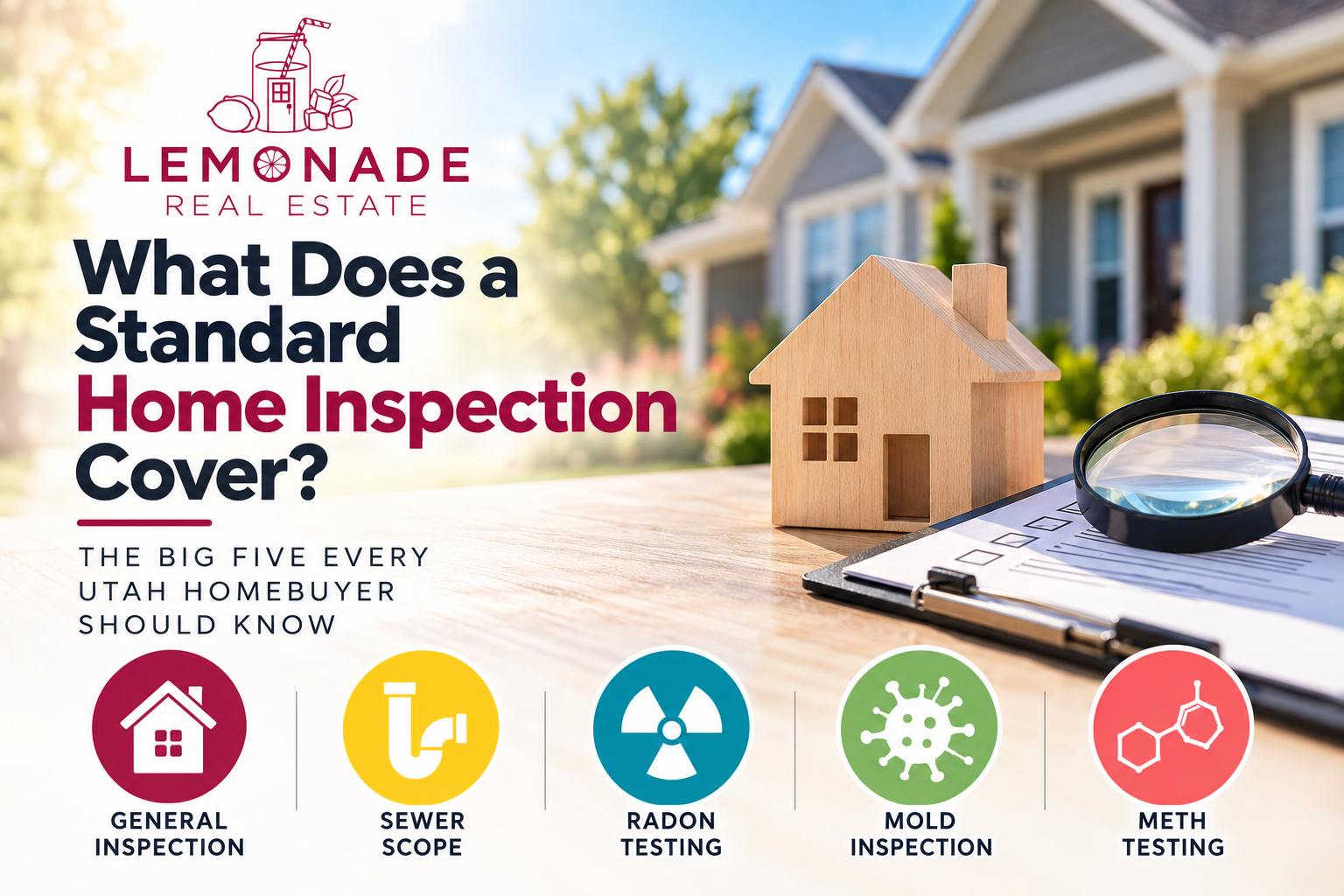
What Does a Standard Home Inspection Cover? The Big Five Every Utah Homebuyer Should Know

What Does a Standard Home Inspection Cover? The Big Five Every Utah Homebuyer Should Know
Let's clear up one of the biggest misconceptions in real estate: a home inspection is not about passing or failing. It's about understanding the condition of a home, recognizing the potential risks, and deciding whether you're comfortable accepting those risks before moving forward. At Lemonade Real Estate, we encourage buyers to ask two important questions: Am I comfortable assuming these risks, and are there opportunities to ask the seller to help reduce them?
The Big Five Home Inspections We Recommend
At Lemonade Real Estate, we refer to five important inspections as the "Big Five." A standard general inspection is the starting point, while the other four are separate, specialized inspections or tests.
1. General Home Inspection
Think of this as a top-to-bottom, 360-degree evaluation of the home's visible and accessible systems and components. A general home inspector typically evaluates the roof, foundation, plumbing, electrical systems, furnace, air conditioning, water heater, windows, doors, and other major components. Inspectors may also test accessible outlets, switches, lights, fans, cabinets, and installed appliances, depending on their scope of service. The goal is to identify visible defects, safety concerns, deferred maintenance, and components that may require further evaluation. It's important to remember that a general inspection is primarily visual and cannot uncover every hidden issue.
2. Sewer Scope Inspection
A sewer scope uses a specialized camera to inspect the home's sewer lateral. We're looking for problems such as broken pipes, root intrusion, blockages, improper slopes, or low spots commonly called "bellies." Sewer repairs can become particularly expensive when lines are buried deep underground or run beneath driveways, sidewalks, or other improvements.
3. Radon Testing
Radon is a naturally occurring radioactive gas produced by the breakdown of uranium in soil and rock. It's invisible, odorless, and tasteless. The Environmental Protection Agency (EPA) recommends taking action when indoor radon levels reach 4.0 picocuries per liter (pCi/L) or higher. Homeowners may also consider mitigation when readings fall between 2.0 and 4.0 pCi/L. Because radon exposure increases the risk of lung cancer, testing is an important consideration for Utah homebuyers.
4. Mold Inspection and Testing
Mold inspections can help identify moisture concerns, visible microbial growth, and conditions that may support mold development. Depending on the circumstances, an inspector may recommend air sampling, surface sampling, or further moisture investigation. Not every home requires laboratory mold testing, and air samples alone cannot establish whether a home is mold-free. The priority is identifying and correcting moisture problems.
5. Methamphetamine Contamination Testing
Methamphetamine contamination testing is another inspection option we encourage Utah buyers to consider. A qualified professional may collect surface wipe samples from selected locations, potentially including areas near HVAC vents, to screen for methamphetamine residue. Testing can help identify potential contamination concerns, although results alone may not establish how or when contamination occurred. Elevated findings may require additional evaluation or remediation under applicable Utah requirements.
What Happens When an Inspection Finds a Problem?
This is where professional guidance becomes especially valuable. A general home inspector may identify an issue with a roof, foundation, electrical system, or plumbing, but that doesn't necessarily mean they're qualified to determine the full scope or cost of repairs. At Lemonade Real Estate, we often recommend bringing in the appropriate specialist, such as a structural engineer, licensed plumber, electrician, HVAC contractor, or roofing professional, to further investigate the concern and provide a repair estimate. With that information, buyers can make informed decisions about whether to accept the property's condition, negotiate repairs or concessions, request a price adjustment, or exercise applicable contractual rights.
The Bottom Line: Inspections Are About Understanding Risk
No home is perfect, and an inspection report isn't a pass-or-fail grade. The purpose of due diligence is to understand what you're purchasing, recognize the financial and safety implications, and decide whether the home and its potential risks are right for you. Once you accept the risk and move forward with the purchase, their is very little you can do to go back to the seller and ask for relief (Unless of course the seller willingly failed to disclose or deceptively covered the issue). At Lemonade Real Estate, our job is to help you understand your options so you can move forward with confidence.
We proudly serve homebuyers and sellers throughout Salt Lake, Davis, Weber, Utah, and Tooele Counties. Have questions about buying a home or navigating inspections in Utah? We'd love to help.
🍋 Lemonade Real Estate | Sweetly Guiding You Home
Contact Abe Mardanlou, Owner and Associate Broker
801.664.1546
https://www.lemonaderealestate.co
or another way