
Categories
Adding Value, Choosing an Advisor, Choosing a Realtor, Equity, Home Buying, Home Improvements, Home Seller Tips, Home Selling, Mortgage, Pricing Your Home Correctly, Real Estate Education, Real Estate Professional, Utah Housing Market UpdatePublished September 3, 2026
Mid-Q3 2026 Utah Housing Market Update: Buyers Finally Have Choices

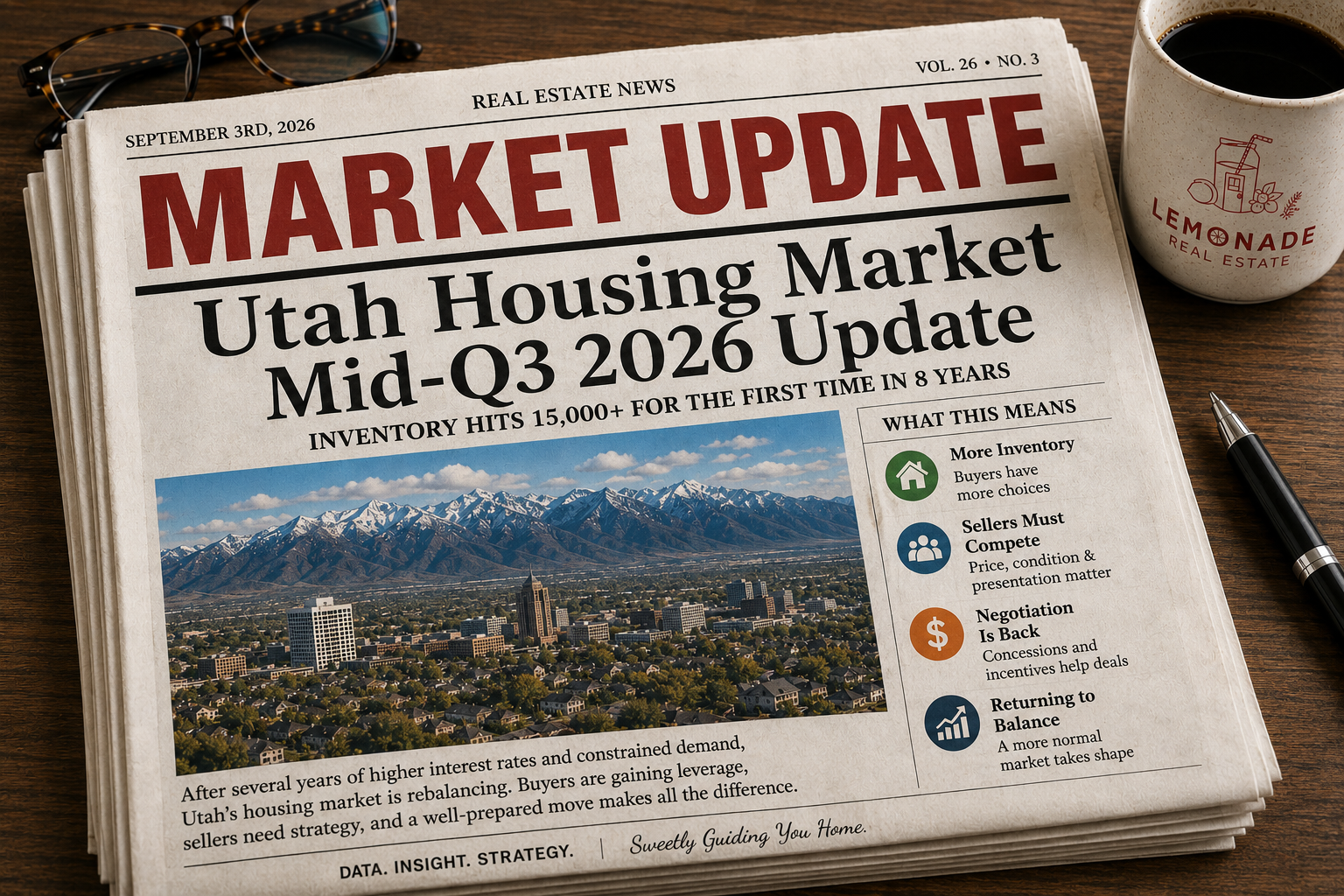
Something significant is happening in Utah's housing market. For the first time in eight years, I have watched the listing pool on the Wasatch Front Regional MLS climb beyond 15,000 active listings. At the same time, sales activity has remained among the lower levels we've experienced during that period. Put those two things together and you get a housing market that feels very different from what Utah homeowners became accustomed to during the pandemic years.
So, what's actually happening? I don't believe the answer is that Utah suddenly became an undesirable place to own a home. Instead, we're watching several years of changing affordability, higher interest rates and gradually accumulating inventory finally begin to rebalance the market.
How We Got Here
To understand today's market, we have to go back to 2022. Mortgage rates began rising rapidly after spending years at historically low levels. Many homeowners had purchased or refinanced homes with mortgage rates around 3% or even lower, while new buyers suddenly found themselves financing homes at significantly higher rates.
That created an interesting problem. Imagine that 100 homes come onto the market, but because higher interest rates have reduced the number of buyers who can comfortably afford to purchase, only 90 of those homes sell. 10 homes remain. The next month, another 100 homes are listed and only 90 sell. Now 20 remain. Do that repeatedly over several years and something important begins to happen. Inventory gradually accumulates.
Obviously, the real housing market is considerably more complicated than this example, but the principle helps explain what we're seeing. Homes continue to come onto the market because life continues to happen. People relocate, get married, have children, get divorced, inherit property, change jobs, retire and experience countless other circumstances that require them to move. But higher borrowing costs have reduced the number of buyers willing or able to absorb all of that inventory. Over time, supply begins to build.
The Mortgage Rate Lock-In Effect
One of the biggest challenges in today's market is that many homeowners don't necessarily need to move. Consider a homeowner who purchased or refinanced several years ago with a mortgage rate below 3%. Maybe they would enjoy another bedroom, a larger backyard, a better location or a nicer home. Under different circumstances, they might move. But moving today could mean selling a home with an extremely low mortgage rate, purchasing a more expensive property and financing that purchase at a rate above 6%. That can create a dramatic increase in the monthly housing payment. The question therefore isn't simply, "Would I like a nicer house?" It becomes, "Do I want that house badly enough to justify what it will cost me each month?" For many homeowners, the answer right now is no. Their current home may not be perfect, but it's good enough. Until the reason for moving becomes more important than the financial benefit of staying, many of those homeowners will remain exactly where they are.
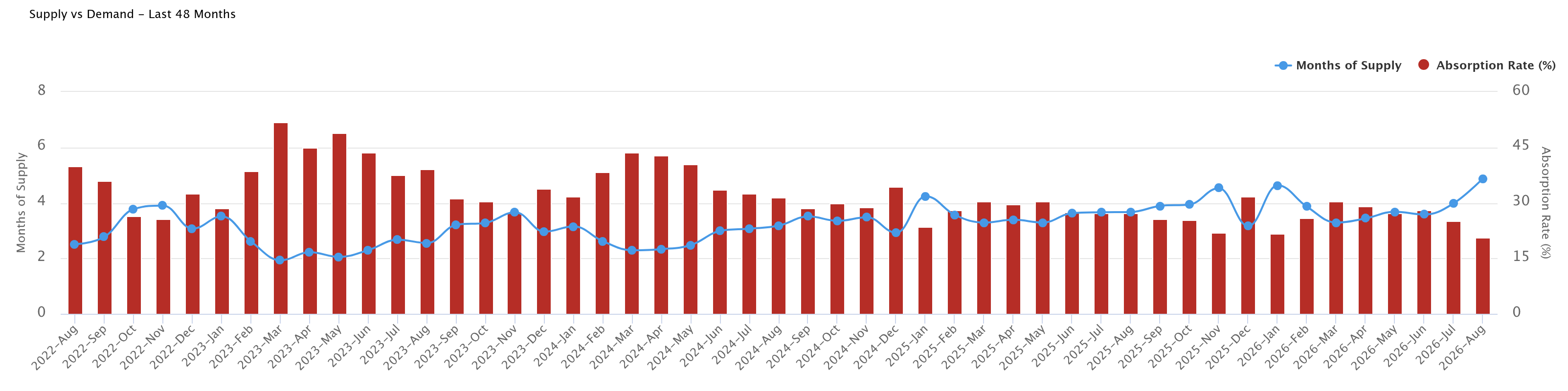
Courtesy of Rapid Stats via UtahRealEstate.com
More Inventory Isn't Necessarily Bad News
When people hear that inventory is rising and sales are slowing, it's easy to assume something must be wrong. But there is another side to this story... Buyers finally have choices. During the most competitive years of the pandemic housing market, buyers regularly had to make extremely fast decisions. Multiple-offer situations were common, negotiation leverage was limited and buyers sometimes felt fortunate simply to get an offer accepted.
A market with more inventory gives buyers an opportunity to slow down. They can compare homes. They can evaluate neighborhoods. They can pay closer attention to condition. They can conduct meaningful due diligence. In some situations, they can negotiate price, closing costs or other concessions. That isn't necessarily an unhealthy housing market. In many ways, it's what a more balanced housing market is supposed to look like.
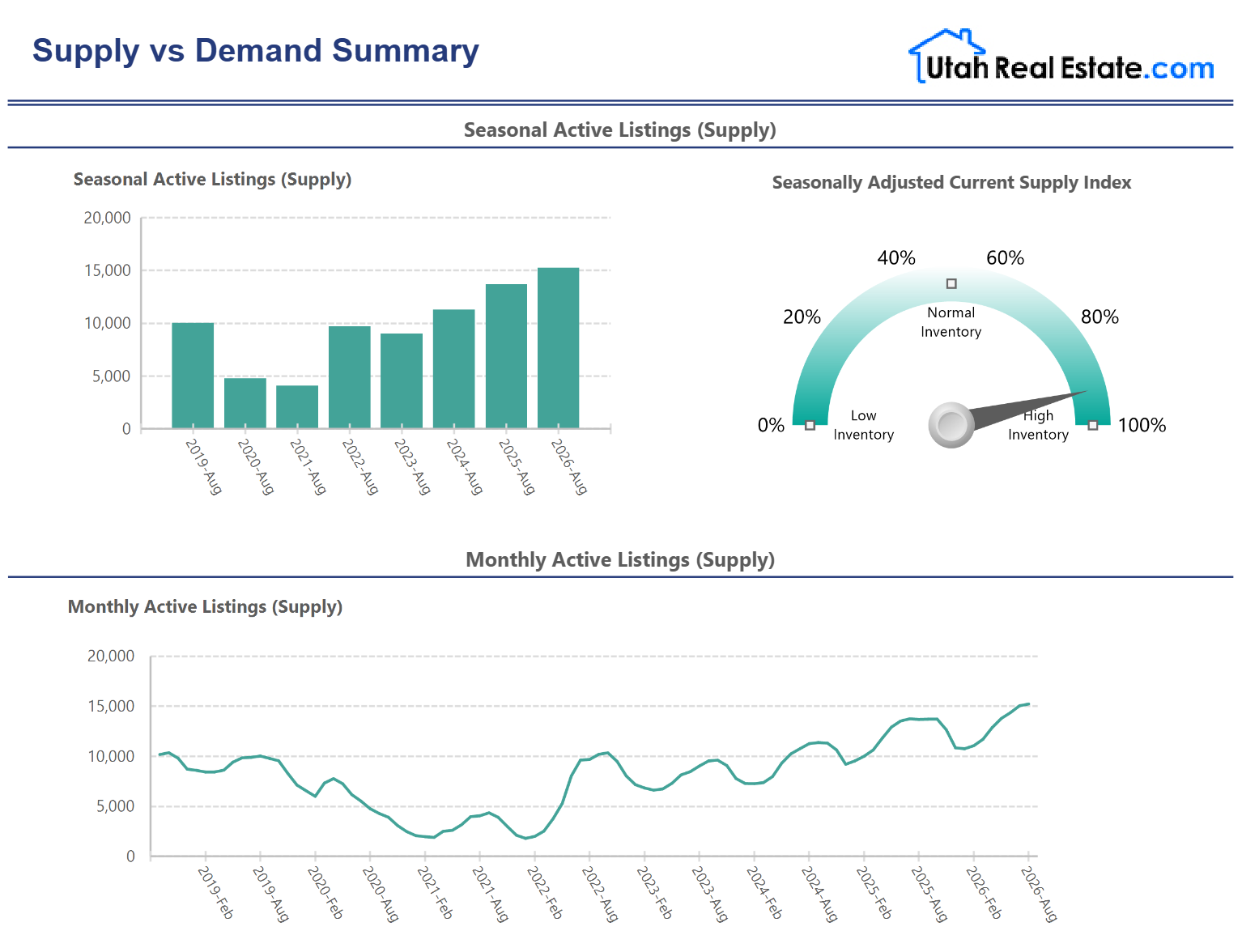
Courtesy of Rapid Stats via UtahRealEstate.com
Sellers Have to Compete Again
The flip side of increased buyer choice is that sellers can no longer assume that simply putting a home on the market will produce an acceptable offer. When buyers have 10 homes to choose from instead of two, every seller is competing for that buyer's attention. I believe three things become incredibly important:
Condition, Price and Location.
You can't change the location of your property, but you can control how the home is presented and how aggressively it is priced. Homes that are clean, well maintained, properly prepared and appropriately priced can absolutely sell in this environment. Sellers with significant equity may also have additional flexibility to offer closing-cost concessions or other incentives that make purchasing their property more attractive. The properties that struggle are often the ones where the seller wants yesterday's price without acknowledging today's competition. This is a market where preparation matters.
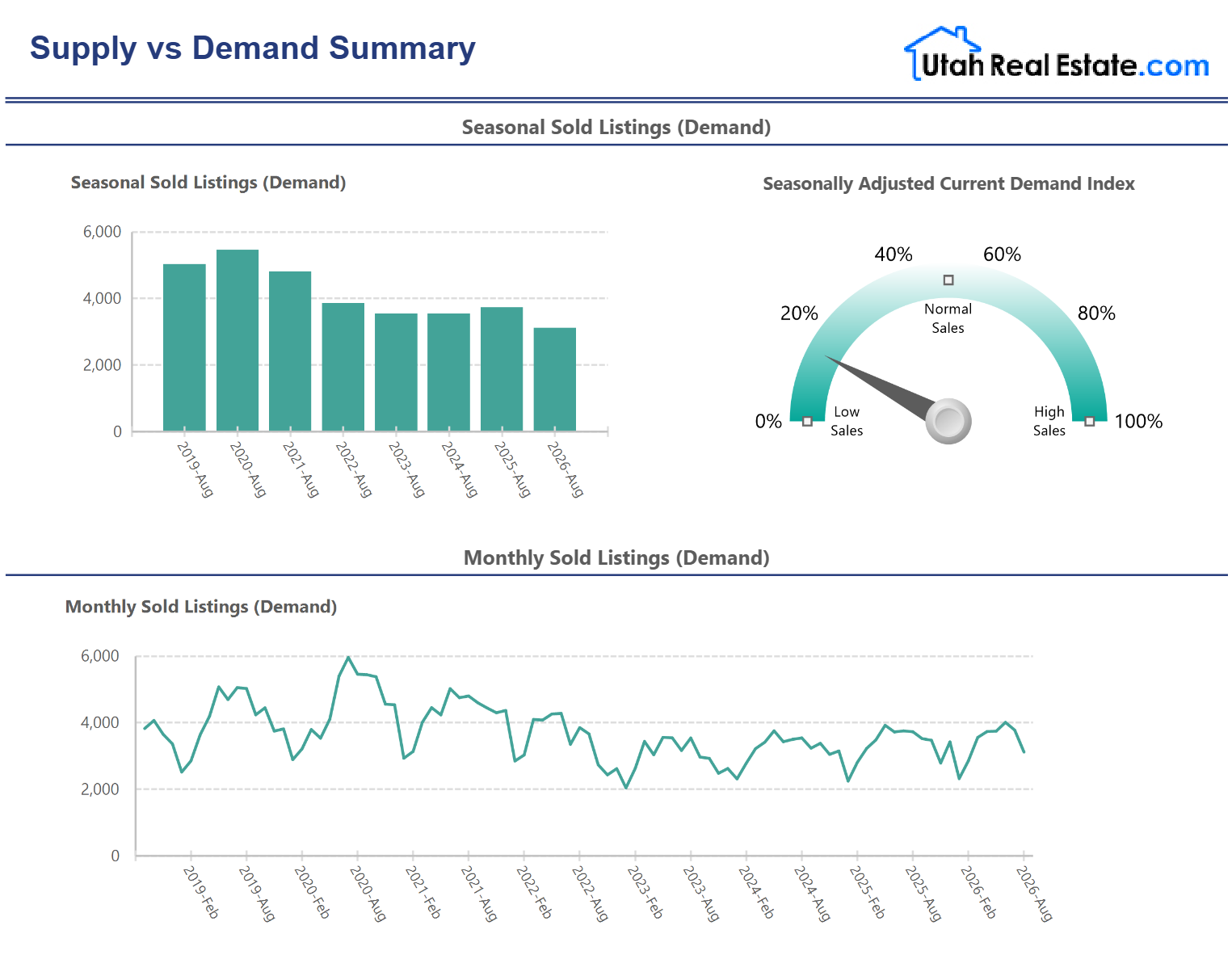
Courtesy of Rapid Stats via UtahRealEstate.com
Buyers and Sellers Can Both Win
One of my favorite things about a more balanced market is that a successful transaction doesn't necessarily require one side to lose. A seller may have accumulated significant equity over many years and still sell their home successfully, even if they have to be more thoughtful about pricing or provide a concession. At the same time, a buyer may receive a fair purchase price, have time to complete appropriate inspections and negotiate assistance with closing costs or financing. The seller accomplishes their reason for moving. The buyer finds the right home. That's a healthy transaction.
Don't Let the Market Become the Entire Decision
This may be the most important part of this update. We spend an enormous amount of time asking whether it's a "good market" or a "bad market" to move. I think that's the wrong question. The better question is: Why are you considering moving?
Maybe your family has outgrown your current home. Maybe you want your children in a different school. Maybe you're spending hours every week commuting and would rather live closer to work. Maybe you want to be closer to grandparents. Maybe your neighborhood no longer feels like the right fit. Maybe you're approaching retirement and don't need as much house anymore.
Housing decisions shouldn't be made solely because a chart says inventory is up or interest rates are down. The market matters because it affects the financial consequences of your decision, but the purpose behind the move matters too. A home is ultimately the setting where an enormous portion of your life takes place.
What This Means for First-Time Homebuyers
First-time buyers have a particularly interesting opportunity in this environment. They don't have a 3% mortgage they're giving up. This is simply the market they're entering. Yes, housing is expensive. Interest rates remain higher than buyers enjoyed several years ago, and monthly payments have to be taken seriously. But buyers who have stable employment, adequate reserves, manageable debt and a realistic budget may now have something that was extremely difficult to find several years ago... time and choices.
That doesn't mean everyone should rush out and purchase a home. It means financially prepared buyers can evaluate opportunities without feeling like every property requires an immediate decision. The goal shouldn't be to perfectly time the housing market. The goal should be to purchase the right home, for the right reasons, under financial circumstances you can responsibly sustain.
A Market Returning Toward Balance
The charts accompanying this article tell an important story. Active inventory has risen, sales activity has remained constrained and the relationship between supply and demand has shifted considerably from what we experienced during the pandemic housing market.
Buyers have more choices. Sellers have more competition. Affordability remains challenging. Negotiation matters again. In many ways, we're relearning how to operate in a housing market where both sides actually have something to negotiate.
I remain optimistic about Utah housing over the long term. But optimism doesn't mean pretending that affordability isn't challenging or assuming every property will appreciate every year. It means recognizing that people will continue moving, families will continue needing homes and housing decisions will continue being made through changing economic environments.
Whether you're buying or selling, don't make your decision based solely on fear of today's market or hope for tomorrow's. Understand the numbers. Understand your options. Understand why you're moving. Then make the decision that best serves you and your family.
Sweetly Guiding You Home
or another way